Hey world!
In this drawing lesson, we will learn how to draw a boat!!!
Every time I do a lesson like this, that requires some knowledge on how to draw something, I make a little study on what I'm drawing. This time I wanted to show you some of the work I made on studying how different boats look from different angles.
Lets get down to business!
Here is the basic shape of a boat:
This may seem funny and too simple, because most of us DO know how a boat looks, but this was very important for me, since I didn't know EXACTLY how a boat looks and "behaves" in space, especially from below, or from other different angles.
Here are some more different angles and perspectives in which I drew some more boats.
This was mainly for me, so I could choose an ideal angle to draw in. I also shaded some of these for my own fun.
Now its time to choose an angle / perspective, and start with a rough sketch. For more information on perspective, check out my previous lesson here: How to draw in perspective - one point.
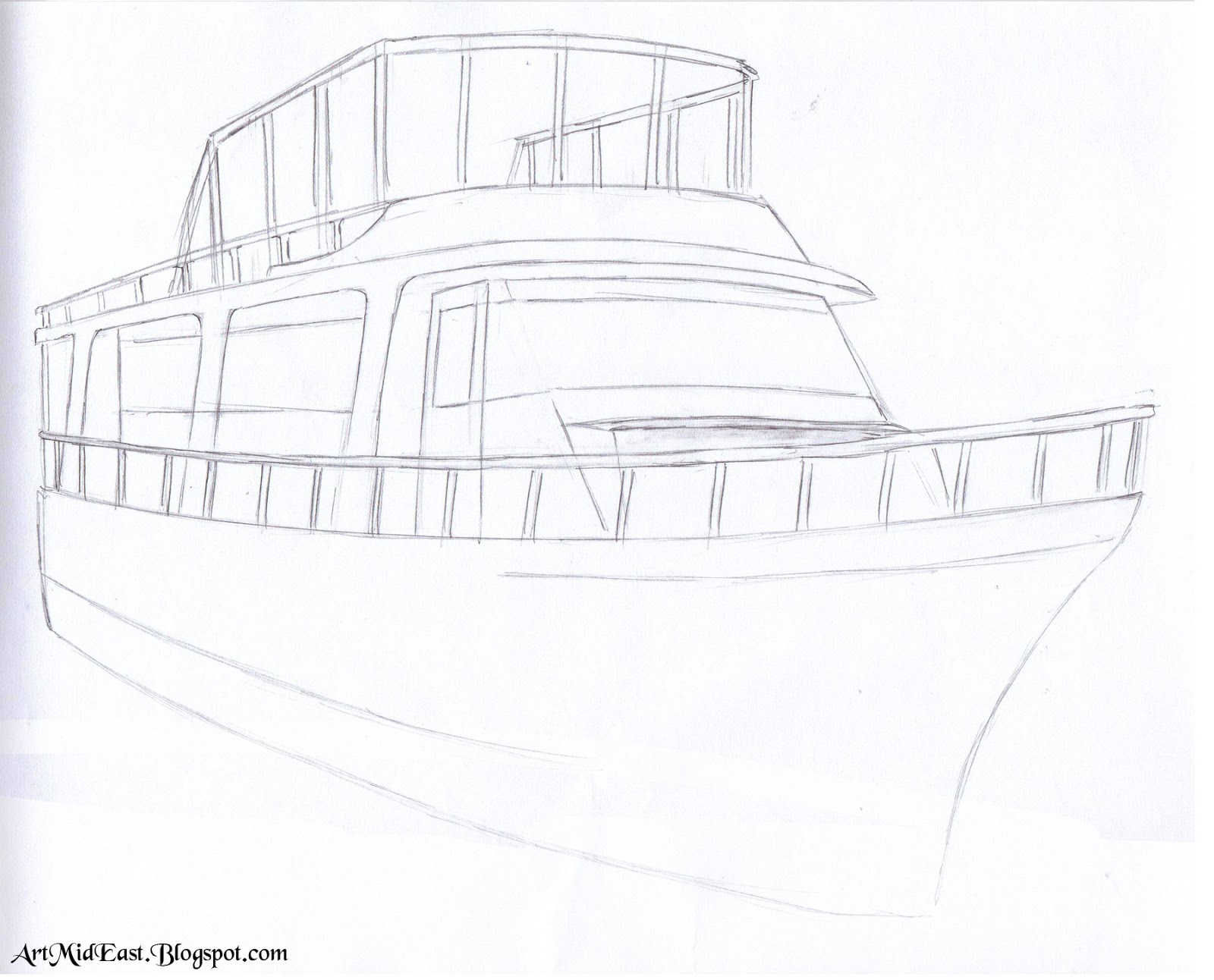
Here I built the extremely simplified, rough sketch of the boat:
What I'm worried about now, is getting the lines in the correct places, especially the longer ones. Also, I make sure the lines are congruent with the perspective (you can try and find the vanishing point on the left, outside the canvas...).
Now its time to add in some details:
I added more to the structure itself, as well as a preparation for the windows and guard rails. All of these details are conforming to the perspective I set up.
Now its time for the real deal:
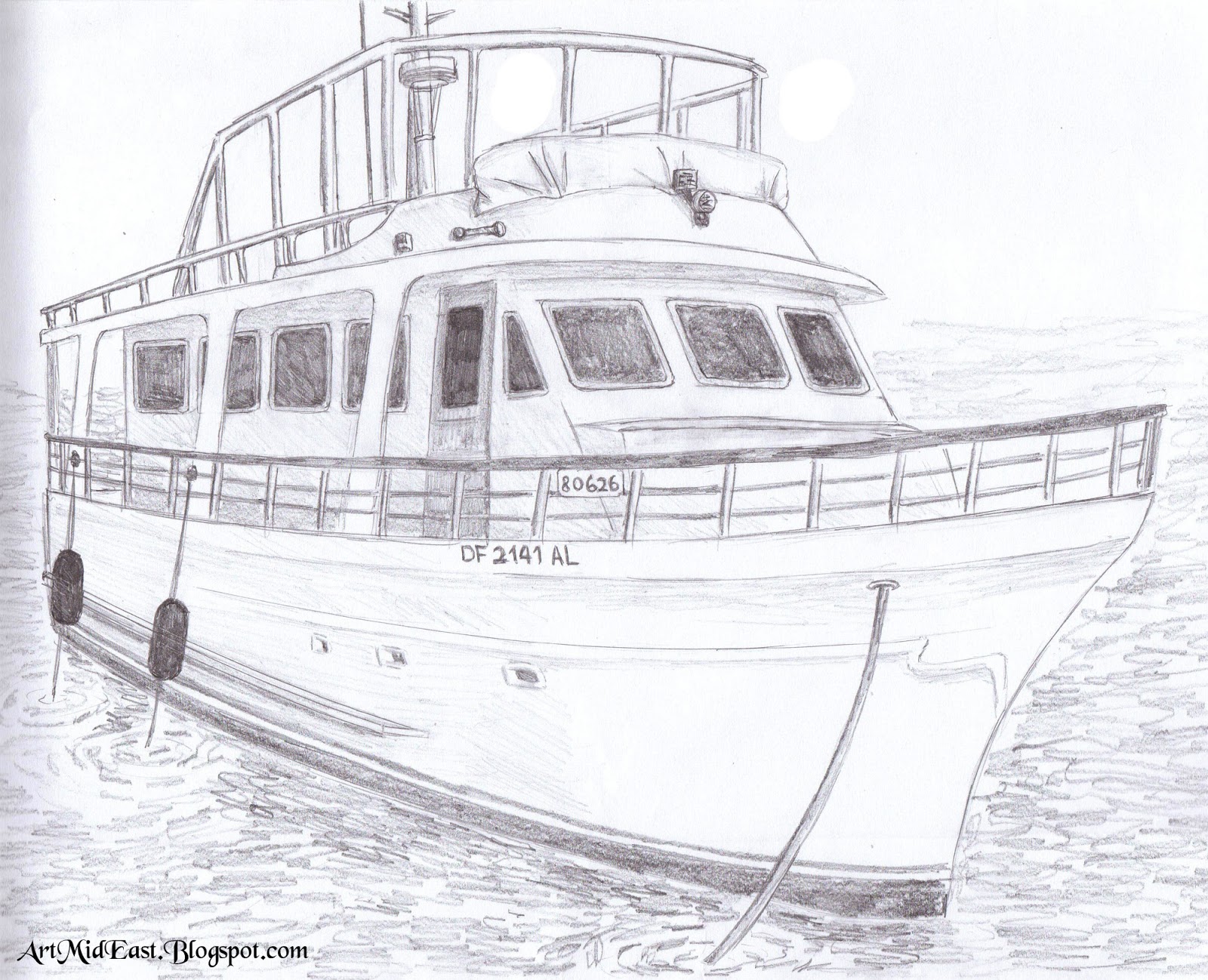
This took the major bulk of my drawing time, since I added so many details and objects to the boat. This is basically the final version BEFORE the shading process. I added, the ropes (including some ripples in the water), the windows, the small signs, the post, some small objects like the lights and horn, and cleaned some unnecessary lines.
----
Check out my new website and subscribe for a FREE eBook! (=
LironYan.com
----
About the windows:
Notice how on the previous step I drew long lines for the windows, and in this step I divided them into the windows and erased the lines. This is a really neat trick for getting many lines correctly, since the windows are at the exact same height.
Now its time for the shading! For a more detailed shading lesson, check out this drawing lesson: Sketching and Shading techniques.
Here are some examples of me shading the door and windows:
A useful tip - put a small piece of paper under your hand, so you won't smear your drawing. This is especially important if you do a pencil shaded drawing, because most of the lines aren't going to be erased!
like this:
I didn't put much thought into the water, and used my instincts to draw them. As you will see in a moment in the final version, I made sure to get some ripples around the ropes, and also the reflection / shadow of the boat's body.
And here is the final version!!
I think this one turned out really cool, and even though I made some minor mistakes on the first steps (with the basic sketch and perspective), it still turned out nice and even a bit realistic.
This is it for today's drawing lesson. Hope this gave you some inspiration to go out and draw your own boats. I suggest going out and actually taking pictures of real boats, and then using them as your reference, which is actually what I've done here!
Next lesson will be very fun, and will discuss a highly requested topic, so keep your eyes open and stay tuned... (;
Also, check out my new website and subscribe for a FREE eBook! (=
LironYan.com
Peace,
- Liron.
Read More
Hey world!
This is a part 2 lesson for my old drawing lesson on How to draw a hand - Clenched fist and open palm. Today's drawing lesson is going to be a more of a step by step guide for drawing hands. You will learn exactly how to approach this subject. This lesson will include explanations of the human hand's anatomy, what are it's proportions, how to draw it IN ANY POSE and give it depth and solidity.
So without further ado, lets get started!
How to draw hands - Step by step guide
Anatomy of the human hand:
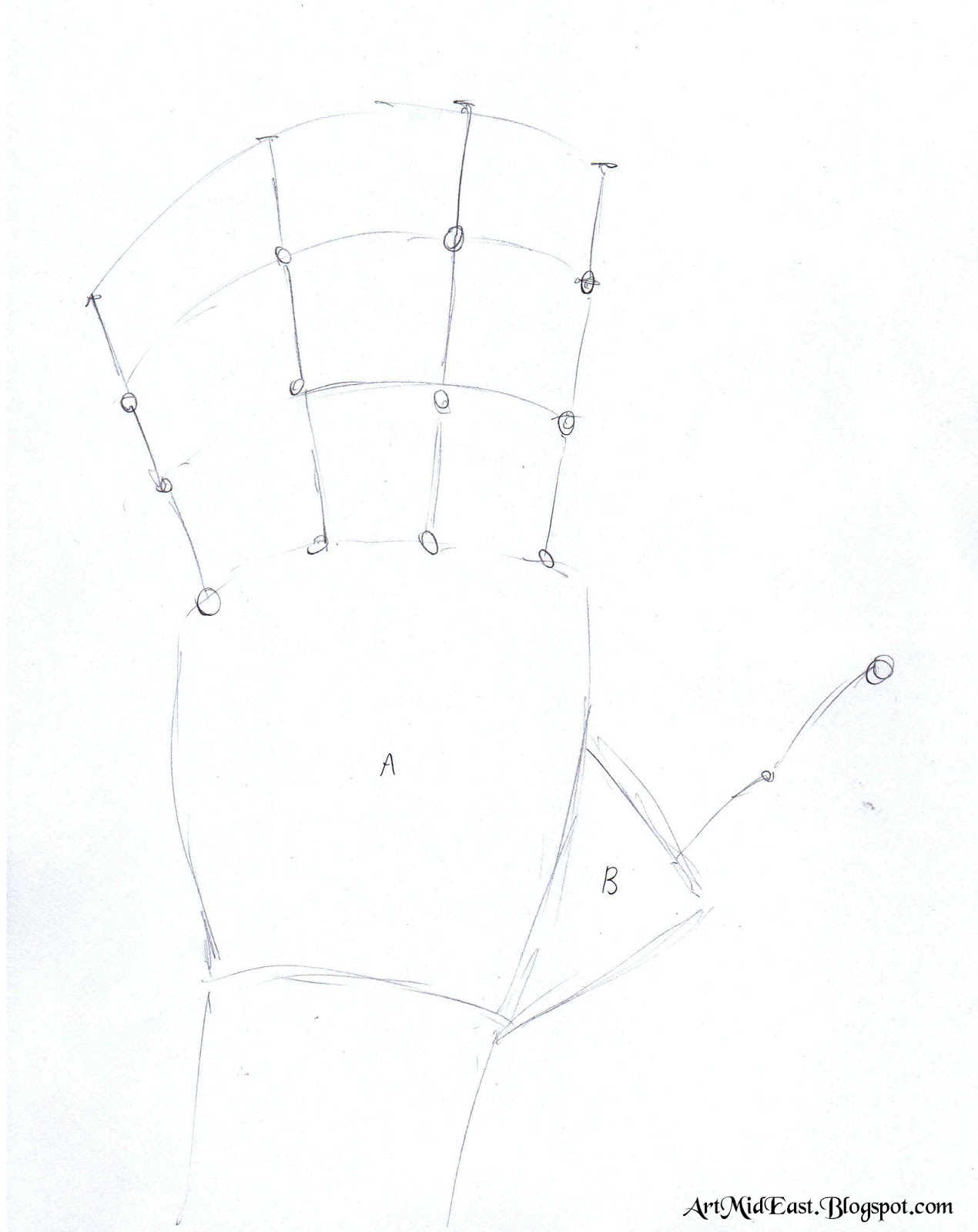
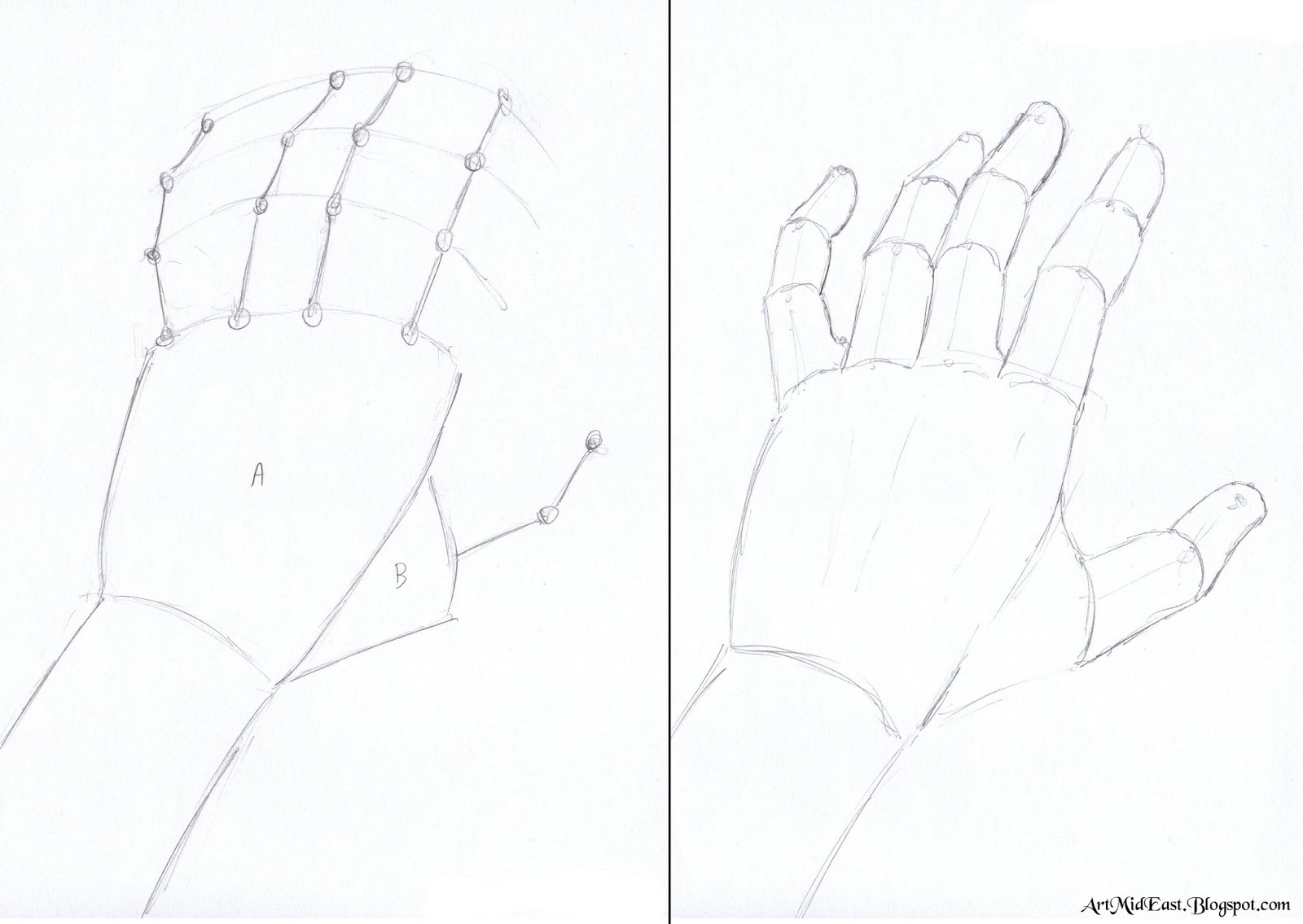
So first, lets learn how the human hand is built. Here is the sketch for the previous drawing.
You can see that that hand is composed of the following parts: part A, part B and the fingers. The overall length of the hand, top to bottom, should be enough to reach from your chin to you hairline. This should give you a good idea on how big the hands should be, which is a major sticking point for many people (including me).
The biggest part of the hand, is the one I marked as part A. Sadly, I can't find a simple "trick", or method of drawing it. I have to actually think while doing so [=. It can help however, to imagine it as sort of a trapezoid. Its inner side (the side closer to B) is longer. After drawing it a couple of times you will kind of get it, and be able to draw it from top, bottom and sideways.
Next is part B. This part connects to the inner side of A (when looking at the hand from top, like both drawings). It also connects to the thumb. Part B is a triangle. Its length (from wrist to beginning of thumb) is about half the length of part A (from wrist to middle finger). After looking at my hands, and many other people's hands, I noticed that its angle is about 40 degrees, but can vary depending on the movement of the thumb.
Now its time for the hardest part - the fingers! Now that's quite a challenge. Check out the fingers on both examples. You can see (as I pointed out on my previous lesson) that the knuckles create a fan. This makes the middle finger the longest, the ring and index fingers almost equal in length, and the thumb and little finger also almost equal in length. Here are a couple of tips for drawing the fingers correctly:
- The Length of the middle finger is about the same as the length of part A.
- The fingers, from longest to shortest: middle, index, ring, thumb and little (together).
- Each finger (except the thumb) is divided into 3 knuckles, with the 3rd (farthest from A) "bended" a tiny bit to the back. For the thumb, the same is true to the second knuckle. Also, the fingers are a bit thicker where the knuckles are.
- The fanning is critical for drawing a correct, realistic looking hand.
- The nails are on top of the 3rd knuckle, and take up about half of it's length.
After we talked about each part individually, lets see how they all connect.
----
Check out my new website and subscribe for a FREE eBook! (=
LironYan.com
----
Hand #1 - Step by step
The first hand we are going to draw, will be from the opposite side of the 2 previous drawings, and with the fingers slightly bended (this angle is actually pretty similar to the one from my older How to draw a hand lesson.
Here you can see the wrist, and part A connecting to it. As I've said before, part A is a round trapezoid. I tried to be as simple as I can, and later on we will add more details to this and all of the other shapes.
Here I added part B. Not a whole lot to add, but notice the ~40 degrees angle we've talked about.
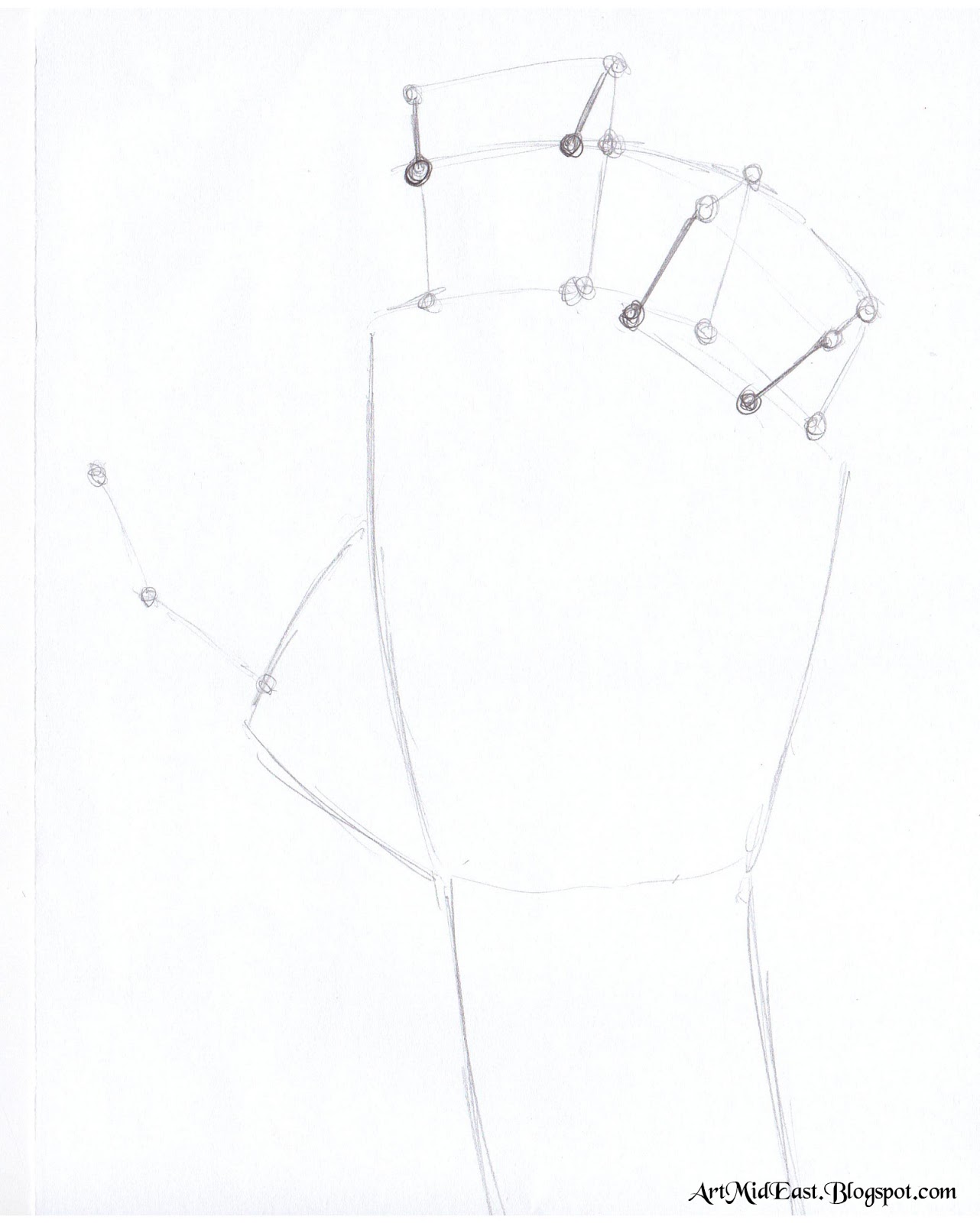
Here I added the first knuckle of each finger, including the thumb. Usually we will start by drawing where the fingers are going to END (so we can gauge their length), but for this example I prefer to do it that way. The most important thing here, is to make sure we get a fan if we were to connect the knuckles.
Here I added another knuckle to each finger. Since the ring and little fingers are very bended, this knuckle is lower then the first one. The index and the middle fingers are only slightly bended. This is a common thing that happens in hands, having the shorter fingers bend more the the longer ones.
Here we added the third knuckle. This time, the index finger's 3rd knuckle is actually blocking our view of the 2nd one. Look at your own hand and see it happening for yourself.
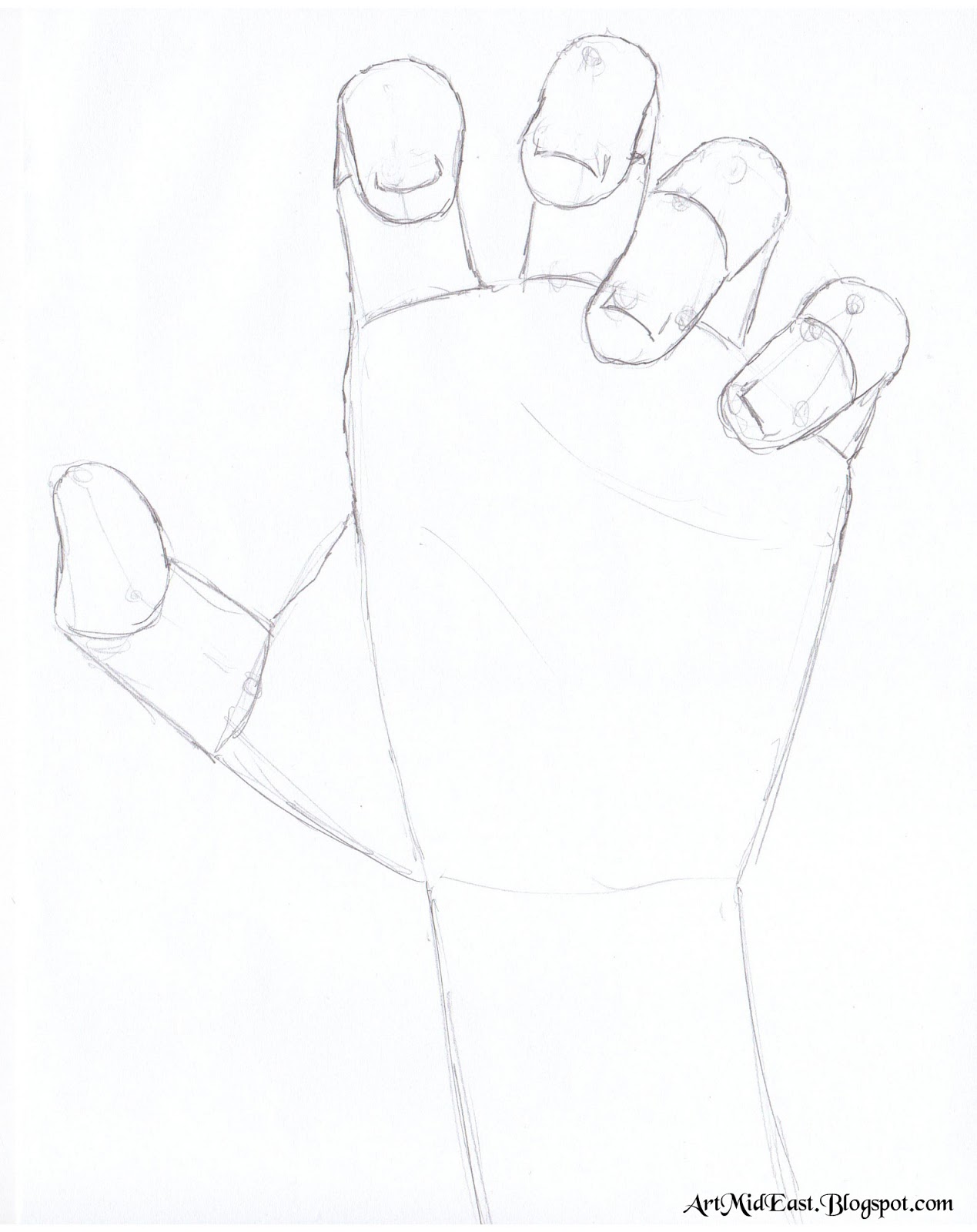
This is the cool part, where we actually make solid fingers, based on the lines we drew up till now. It is important to note again, that the fingers are thicker where the knuckles are (meaning where they bend), and their 3rd knuckle is slightly bended back. I find that this part is actually quite challenging. Another important thing is to take into consideration the foreshortening that occurs with the fingers that are pointing towards us. This affects how the nails look as well. This is also tricky, so take your time building it up, and erase and redraw if necessary.
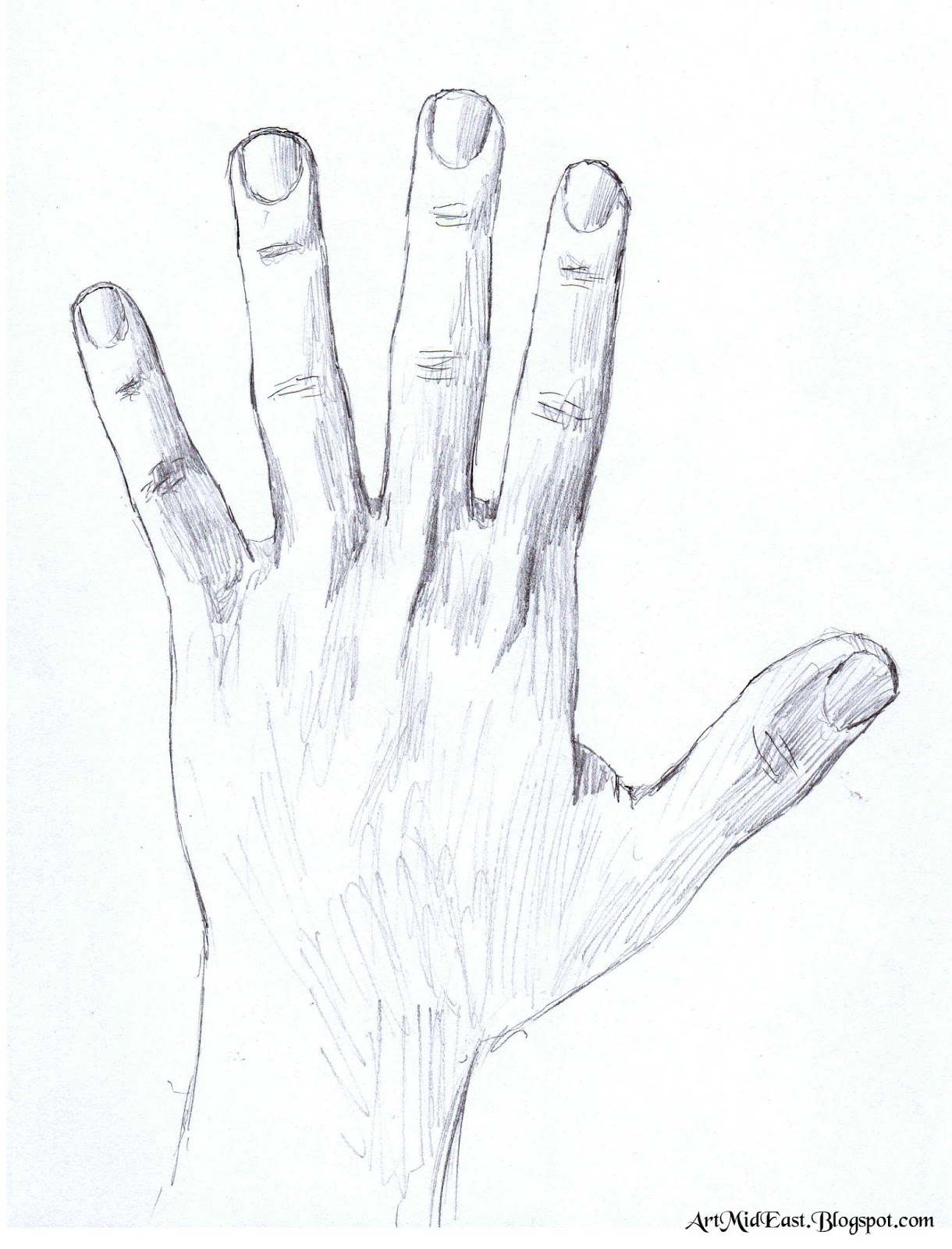
Here I shaded the hand. Check out my lesson on Sketching and Shading Techniques for more on that. I will just point out that the light source is coming from the left, so the shadows are on the right. This really helps to indicate the nails.
And we are done with this hand
----
Check out my new website and subscribe for a FREE eBook! (=
LironYan.com
----
Hand #2 - Step by step
We are now going to draw a hand in a very natural and relaxed position. This is the way a hand typically looks like, when a person is standing in place.
Here are our A and B parts. Since this is a more relaxed pose, part B is less prominent. Try and look at different hands, and see how this occurs in different angles. Later on, we may see angles in which the thumb, and also Part B, are not visible at all.
Here I added the knuckles, and indicated the fanning that occurs. You can kind of already imagine the fingers.
Here I solidified the fingers, and slightly indicated the thumb's nail. Notice how, again, the shorter fingers are bending MORE then the longer ones.
Two More Examples
Here is an example of turning the sketch into solid objects (mainly the fingers). Its important to remember that these are all cylindrical objects, that have mass, and as such you have to draw them properly.
Here is a colorful example, that will help you understand the sketch better.
--------------------------------
That's it for the examples. I hope this drawing lesson gave you some simple tools that will help you learn how to draw human hands. There are a lot of things to learn, and there are literally infinite angles and poses. This is great, since you are being challenged constantly.
On my next post, I will draw a few more interesting angles of hands, including ones holding objects, just to get your creative juices flowing.
And after that, we are going to mix it up and draw something completely different and surprising.... [=
Check out my new website and subscribe for a FREE eBook! (=
LironYan.com
Good things to come,
Peace,
- Liron
Read More
Yo yo yo!
Today's drawing lesson is going to be a part two, for my first lesson on how to draw a ferrari 355 F1.
This time we will learn how to draw the Ferrari Enzo, which is... well... AWESOME!
So lets jump right into it.
The Ferrari I will be drawing, will be facing away from us, turned a bit to the side. This calls for two points perspective. This is how I built the angle:
If you want a more in depth explanation on drawing in perspective, check out my lesson, on How to draw in perspective - One point.
Now see if you can tell where the two points are. In case you are having a hard time (one of them is easier to find then the other), I made this just for you:
Now you can see how the two points are actually very far from each other. I used 3 papers for this, one for drawing, and two more for each point.
After we set up the perspective, it is time to draw the basic lines of the Ferrari Enzo. This step is crucial, since we have to make sure it all fits in the perspective the way it should, and that all the lines are in agreement with the perspective.
Here is the basic sketch:
Notice how all lines, even the curved ones, are congruent with the perspective. Drawing curved lines in this manner is quite challenging, since there are no clear rules. You have to observe the object you are drawing, and pay close attention to the curves, from different angles.
Here is the sketch, together with the perspective lines:
Now its time for my favorite (and for me, the toughest) part. Adding the details. I add all the lights, the wheels, the details on the body of the car, and the details and way he doors are built.
Here is what I came up with:
Pay attention to how the details I added are also congruent with the perspective. This is especially noticeable in the back part of the car.
Next thing I do, is cleaning the drawing from all excessive and unnecessary lines. This lets you understand better, what you drew and how the car "behaves" in space. This is a preparation for the next step, which is coloring!
I use my favourite method of placing the paper on the window, and coloring onto a new paper. Here are some examples of the process:
So the last example is the finished, scanned and colored drawing.
Now its time to ink this beast. The thing is, this time, I'm not going to use a nib pen, but rather a Micron Pigma black pen, by Sakura. The reason I won't be using a nib pen this time, is that this Ferrari is built from many curved lines, and the Micron Pigma works great with these lines. Also, this pen draws amazingly ON/OVER colored pencils, something that the nib pen sometimes has a hard time doing.
Here are some examples of using the pen, especially on tough spots, and long curvy lines:
Like on previous lessons, since we first colored, and only then inked, the lines sort of make themselves POP with the help of the colors. For this reason, we can be extremely minimalistic with our use of the ink.
Here is an example of minimalistic use of ink, by leaving a line open and unfinished:
Here is the final version of the drawing, colored and inked:
Let me know what you think of the drawing, and if this drawing lesson helped you.
I will make another lesson real soon!
Peace,
- Liron
Read More
Hey people of the world, how have you been??
On today's drawing lesson you will learn sketching and shading techniques. I wanted to make a refreshing change from my last two lessons, which include coloring, and to show you how you can make a finalized drawing using pencil only! [=
---------------
* Update: I published a more elaborated lesson on sketching techniques I recommend you to check out at: How to sketch - Sketching techniques (Link will open in new window).
---------------
In this lesson, you will be guided with the help of a drawing I made just for that purpose. Here is a sketch of the drawing, it's a guy walking with two dogs, and taking a pic with his phone.
So basically I made a rough sketch of the scene.
On holding the pencil:
When I drew this, and on the following phases, I alternate mostly between two ways of holding the pencil:
1. Holding on the very back of the pencil - this helps me in drawing long, curved lines. The reason for this is that holding the pencil that way uses the natural pivot of the palm, and helps in getting the curves quickly and accurately. It does take some practice though. Here is an example to make it simple to understand:
2. The second way is holding the pencil very close to the lead - this gives more control and accuracy, and helps in places with many small lines, such as the fur of the dogs (and especially that tail of the Husky...).
A word on the speed of drawing:
Bottom line - sometimes you have to draw fast! I don't mean you have to rush through the drawing. I do mean that you have to throw the lines quickly. This is true especially for those long curved lines I was talking about. This can be quite challenging sometimes, but you get used to it. In this example specifically, it is less needed, but when inking it is sometimes extremely important to use quick lines, since otherwise the pen shakes and won't give you the wanted result.
Lets now move on with the drawing - here I darken the lines.
Since my drawing is going to be pencil only, my pencil is my "ink and pen". For that reason, I go over the lines again to make them "pop" the way I want, and to give it a more finalized look. I try to make it as non sketchy as I can. Pay attention to the folds here, I will probably make a different post on this subject, but there are many great resources online.
This is what I got:
----
Check out my new website and subscribe for a FREE eBook! (=
LironYan.com
----
Darkening and Shading
After we've got our finished and refined sketch, it is time to darken what's necessary, and to give it some shading.
What should you darken?
As a general rule, you can darken whatever you want! [=
Some colors however ARE darker when turning images into black and white. A good example for this is the color brown. The best thing to do is to make your own research. here is a short check I made using photoshop:
As you can see, the brown-ish colors are pretty dark, while the blue and yellow-ish aren't.
In my drawing, I chose to blacken the dude's hair, and to only darken the pants (they were actually black, but for the sake of teaching you shading, I will simply make them dark).
Pay attention to how I darken the fur of the dogs. I use short lines that mimic the furs shape, and that creates a more dynamic and realistic result.
Another important thing that helps in making the final drawing cooler, is the direction of the lines which are used to darken areas. I darken in the natural direction of the body being darkened. Like this example of me darkening hair, look how the lines go with the "flow" of the hair. This gives the drawing a nice 3dness:
I learned this from Mark Crilley who is an amazing artist, whose videos you have to check out.
Shading
This is a huge topic, I will try to make it as clear and simple as possible.
There are a couple of main things that influence how shadows are going to look:
A. The power and distance of the light source.
B. The direction of the light source.
C. The distance of the body from its shadow (more correctly, the distance of the body from the surface on which it's shadow is going to appear)
To make it simple - here are some examples I made:
As you can see, the parameters at the top influence the darkness of the shadow, its size, its fuzziness and obviously its location.
In my drawing, the shadow is coming from the top, since its outside, at daytime, and the sun is the most prominent light source. It's late afternoon so the shadows on the floor are week (and also, my scanner + pencil causes them to become even weaker).
Also, I want to emphasize the shadows on the pants, where the knees and shoes are:
Here is the final drawing, after taking into account all of what we talked about!
I hope this drawing lesson was more "zoomed in", and gave you some practical knowledge you can use in order to improve your sketching and shading techniques. I plan to make a more step by step lesson real soon, that will be less theoretical (=
So keep your eyes open for updates!
Also, check out my new website and subscribe for a FREE eBook! (=
LironYan.com
Until next time,
- Liron
Read More